
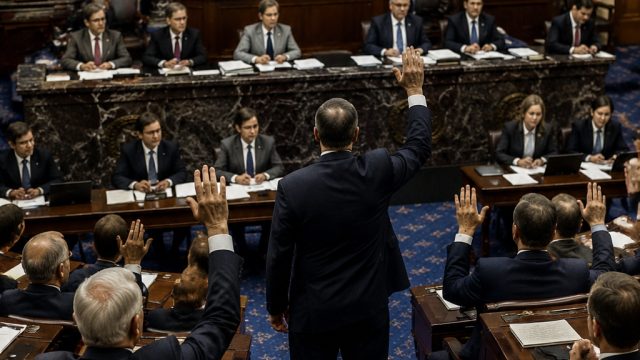
In a significant political move, the U.S. Senate has voted decisively to limit President Trump's authority to engage in military action against Iran. This resolution, passed with bipartisan support, reflects growing concerns about the potential escalation of conflict in the Middle East and emphasizes Congress's role in decisions regarding military engagement.
Understanding the Resolution
The resolution, which passed with a notable majority, serves as a clear message from Congress regarding military operations in Iran. Senators expressed their intent to reassert control over war powers, a responsibility constitutionally designated to Congress. This vote represents a critical juncture in ongoing discussions about U.S. foreign policy and military strategy.
Key Points of the Resolution
- Reassertion of Congressional Authority: The resolution aims to curb executive power, mandating that any military actions against Iran receive prior Congressional approval.
- Concerns Over Escalation: Lawmakers raised alarms about the potential for escalated hostilities and the consequences of unchecked military decisions.
- Bipartisan Support: The vote showcased rare bipartisan agreement on an issue of national security, highlighting a collective desire for restraint in military engagement.
The Implications of the Vote
This Senate vote is not just a procedural decision; it has far-reaching implications for U.S. foreign policy. With increasing tensions in the region, the resolution underscores the necessity of diplomatic solutions over military confrontation. The world is watching as the U.S. navigates its role on the global stage regarding Iran.
Domestic Response to the Resolution
Reactions from both sides of the aisle indicate a significant shift in how military engagements are viewed. Here are some of the key perspectives:
- Supporters: Many view the resolution as a crucial step in preventing further military entanglement in the Middle East, advocating for a focus on diplomacy.
- Opponents: Some lawmakers argue that the resolution could undermine the ability of the President to respond swiftly to threats, raising concerns over national security.
Current Context of U.S.-Iran Relations
The backdrop of this Senate vote is marked by years of tension between the U.S. and Iran. Following the U.S.'s withdrawal from the Iran nuclear agreement and subsequent sanctions, relations have further deteriorated. Recent incidents, including military posturing from both nations, have heightened concerns about a potential conflict.
The Need for Diplomatic Solutions
Experts emphasize the importance of diplomacy in resolving the tensions that have emerged. Engaging with allies and utilizing international forums for dialogue could be instrumental in de-escalating the situation. The Senate’s decision may pave the way for a renewed focus on negotiation rather than military intervention.
Conclusion: A Pivotal Moment in U.S. Foreign Policy
The Senate's recent resolution to limit military action against Iran marks a pivotal moment in U.S. foreign policy. As lawmakers take steps to reinvigorate congressional oversight, the hope is to foster a more balanced approach to national security that prioritizes dialogue over conflict. With global attention on the U.S.'s strategy toward Iran, this decision could redefine the future of American diplomacy and military engagement in the Middle East.
